Keep the same AI character when you change the pose
The new pose has the right coat and completely different proportions. The next one fixes the proportions but swaps the backpack. I'd stop asking for “the same character” as though that were a complete specification. First, decide which few features make the character recognizable in your game.
Write down the identity at game size
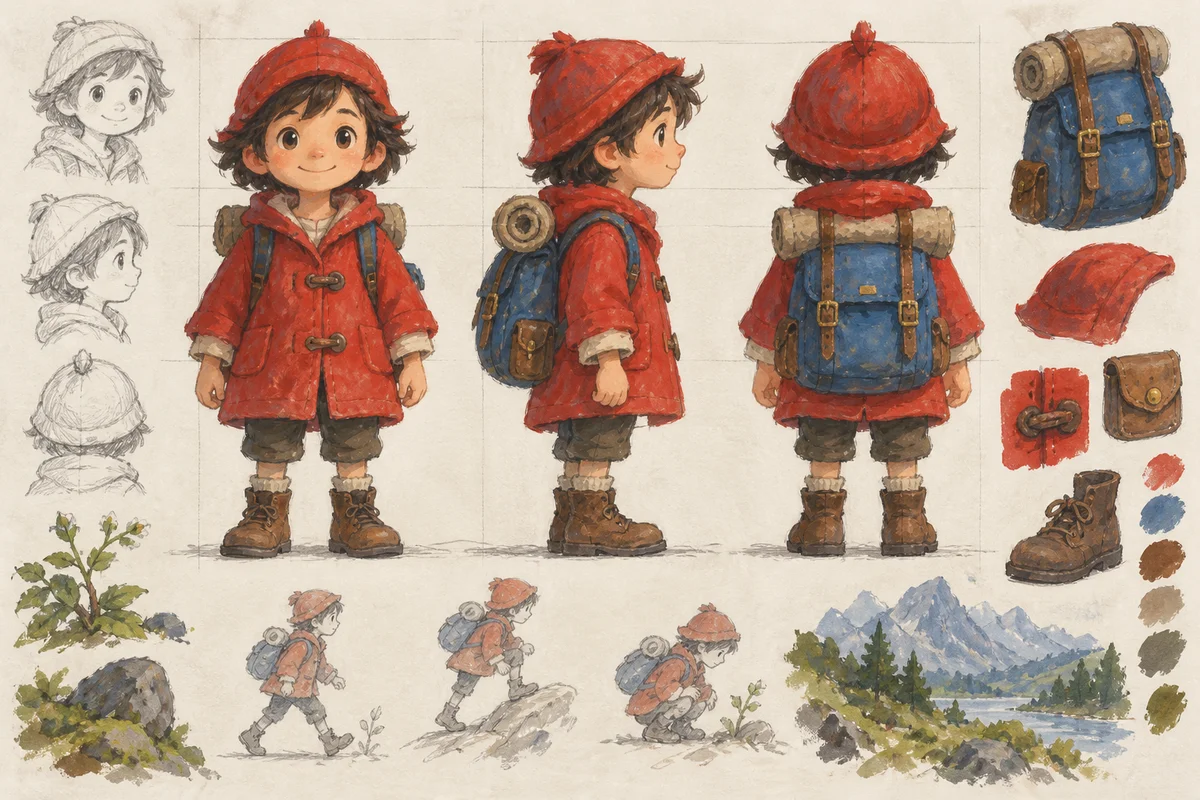
For a courier robot, I might choose a round helmet, short triangular coat, square backpack and heavy dark boots. Those shapes remain visible when the character is small. A tiny badge or elaborate stitching probably won't help the player recognize it.
Approve a neutral reference in the camera angle your game uses. A front portrait is weak guidance for a top-down sprite. Keep the silhouette clear, remove unnecessary props and compare the reference at the final on-screen size.
Change one thing in the next image
Ask for a new arm position before a dramatic action pose. That gives you a manageable way to see whether the reference controls are preserving identity or merely the overall style.
Style references can carry qualities such as palette and texture, but identity is a separate problem. I would check your chosen tool's current reference options rather than assuming one setting does both jobs. The source links below explain the distinction for the tools discussed here.
Change only the courier's arm position to a relaxed wave.
Preserve the round helmet, short triangular coat,
square backpack, heavy boots and body proportions.
Keep the supplied camera angle and lighting.
This is a pose variation, not a new character design.
Compare a family, not a succession of favorites
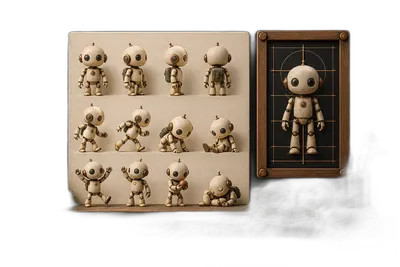
Place idle, walking and interacting poses beside the reference. Check head size, limb length, costume blocks and light direction. Comparing them together catches drift that is easy to miss when each new image arrives in isolation.
If every frame needs substantial repair, simplify the character or change the animation method. A rigged character or manually cleaned sprite set may give you more control than another hundred generations. You can still use AI for the initial design and selected variations.
My acceptance test is straightforward: could a player mistake a pose for a different character? Once identity holds, check the feet and pivot alignment, the point around which the sprite moves or rotates. Consistent art can still jitter in the game if those technical details change between frames.
Sources and further reading
- Midjourney: style reference — accessed Sep 9, 2026
Make something of your own
Describe an idea and play it in minutes.
Create