Build adaptive game music without a tangle of transitions
If you already have a reliable music loop, the next challenge is deciding when it should change. Start with layers that share one musical timeline. The difficult part is usually the transition policy, not adding another audio file.
Align the material before writing the controller
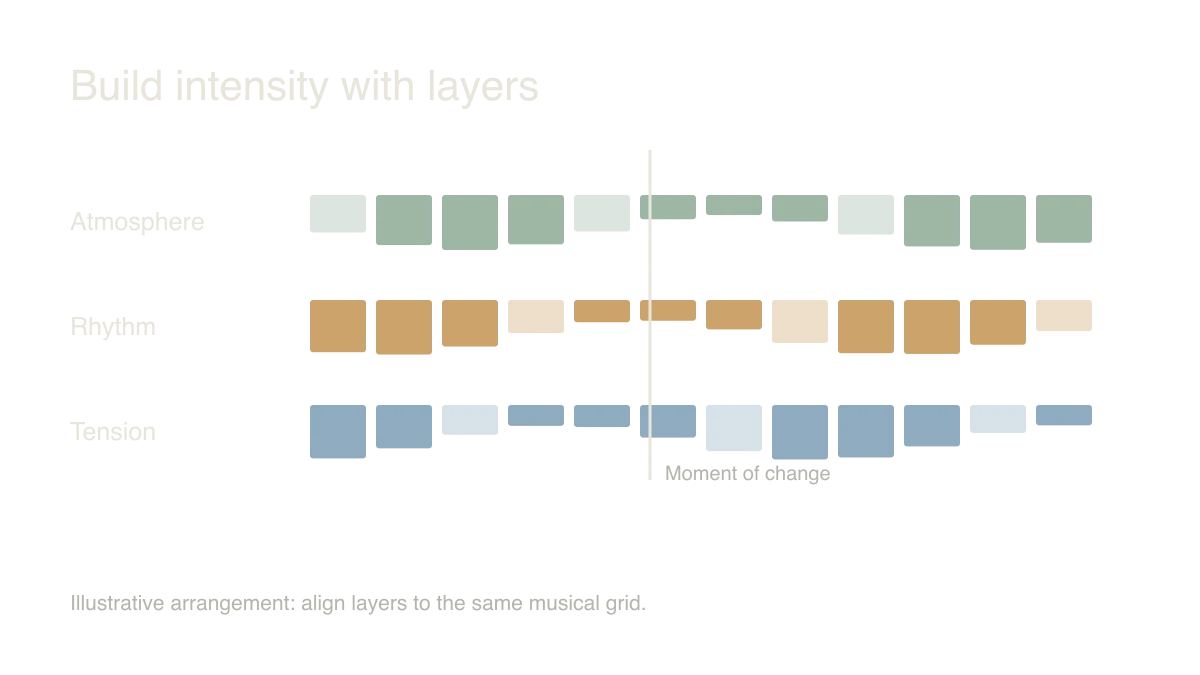
Prepare layers with the same tempo, length and starting point. A base texture, a rhythmic layer and a tension layer make a useful first experiment. Audition them together and in the combinations your game will actually use.
Separate generations may not align musically just because they share a prompt. Check the exports in an editor, including any leading silence. If you can't make the layers work together there, the runtime won't fix the arrangement.
Keep a reference mix and record the loop duration. You need a stable musical foundation before debugging scheduling behavior.
Separate game signals from music decisions
Don't connect every enemy detection directly to a track change. Collect signals into a small music state: calm, alert or danger. Define a minimum time in each state and a different threshold for entering and leaving danger so brief fluctuations don't keep switching the score.
Have your controller request a transition for the next suitable musical boundary. A newer request should replace or cancel the pending one according to an explicit rule. Otherwise a delayed danger cue may arrive after the encounter has ended.
Start synchronized layers together and adjust their levels where the playback system permits it. For section-based music, schedule the next section against the audio timeline rather than depending on an imprecise visual frame update.
Test interruptions as transitions
Build a small test scene that can trigger calm, danger, victory, pause and restart on demand. Try rapid state changes, a restart during a fade and a pause immediately before a scheduled boundary.
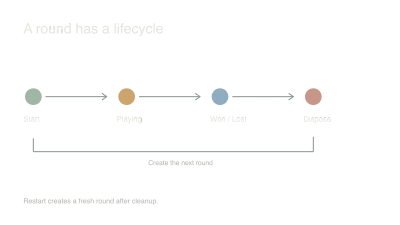
Check that old callbacks cannot change the next round's music. Track ownership of scheduled work and clear it when the owning session ends. This is the same lifecycle problem that causes stale timers in gameplay code.
Record the selected state, pending transition and musical position while testing. Those observations help separate an arrangement problem from a controller problem. Ship three predictable states before adding a score that reacts to everything.
Watch and learn
Companion videos from other creators. Interfaces and versions may differ from your project.
Editing & mixing in Suno Studio 2.0Suno · YouTubeOfficial editing and mixing companion, useful when preparing generated music for a game.Sources and further reading
- Suno Studio 2.0: features, exports and tutorials — accessed Sep 9, 2026
- MDN: Web Audio best practices — accessed Sep 9, 2026
Make something of your own
Describe an idea and play it in minutes.
Create